

Layi PoloReading Time: 5 min
Background
Being known as an ethnically and culturally diverse country, Iran is among very few countries that are home to nomads. The largest tribes in Iran are Bakhtiaries, Qashqai, Turkmen, Shahsevan, etc. Each of these nomadic tribes has its history, tradition, hierarchy, social structure, dress, and of course food, including Layi Polo.
Qashqai people are mostly Turkic who live in various provinces such as Fars, Isfahan, and Khuzestan. However, the majority of them live in Fars province near Shiraz. As the name nomads suggest, these people migrate from one pristine place to another in search of a proper condition, including climate and pasture for their cattle.
Qashghaei nomads move across the Zagros mountain range. They enjoy a traditional lifestyle the same as their ancestors, relying heavily on natural elements and being in harmony with nature; something which is reflected in numerous aspects of their life including their choice of traditional dress and their cooking.
On the contrary to what is happening in the world with the technology explosion, Qashqai nomads are still keeping themselves as far away as possible from the new trends. Nature has had a profound effect on their choice of lifestyle. Just imagine living in a black tent produced by woven goat’s hair, waking up under the vast sky, drinking fresh milk and taking flocks to pastures, breathing fresh air, and being surrounded by nature. It would be great, but not many people can follow this traditional way of life. Nomads live a simple life in complete peace with their surroundings. They have learned to make the best use of basic materials available in their surroundings and then turn it into some useful and practical tools.
Layi Polo-Qashqai Nomad’s food
Since ancient times, natural conditions have been an undeniably important factor in determining people’s diet and their food culture. This is not an exception when it comes to nomads, as they are primarily affected by natural conditions. Their diet is pretty much dependent on their livestock ranging from dairy products to meat.
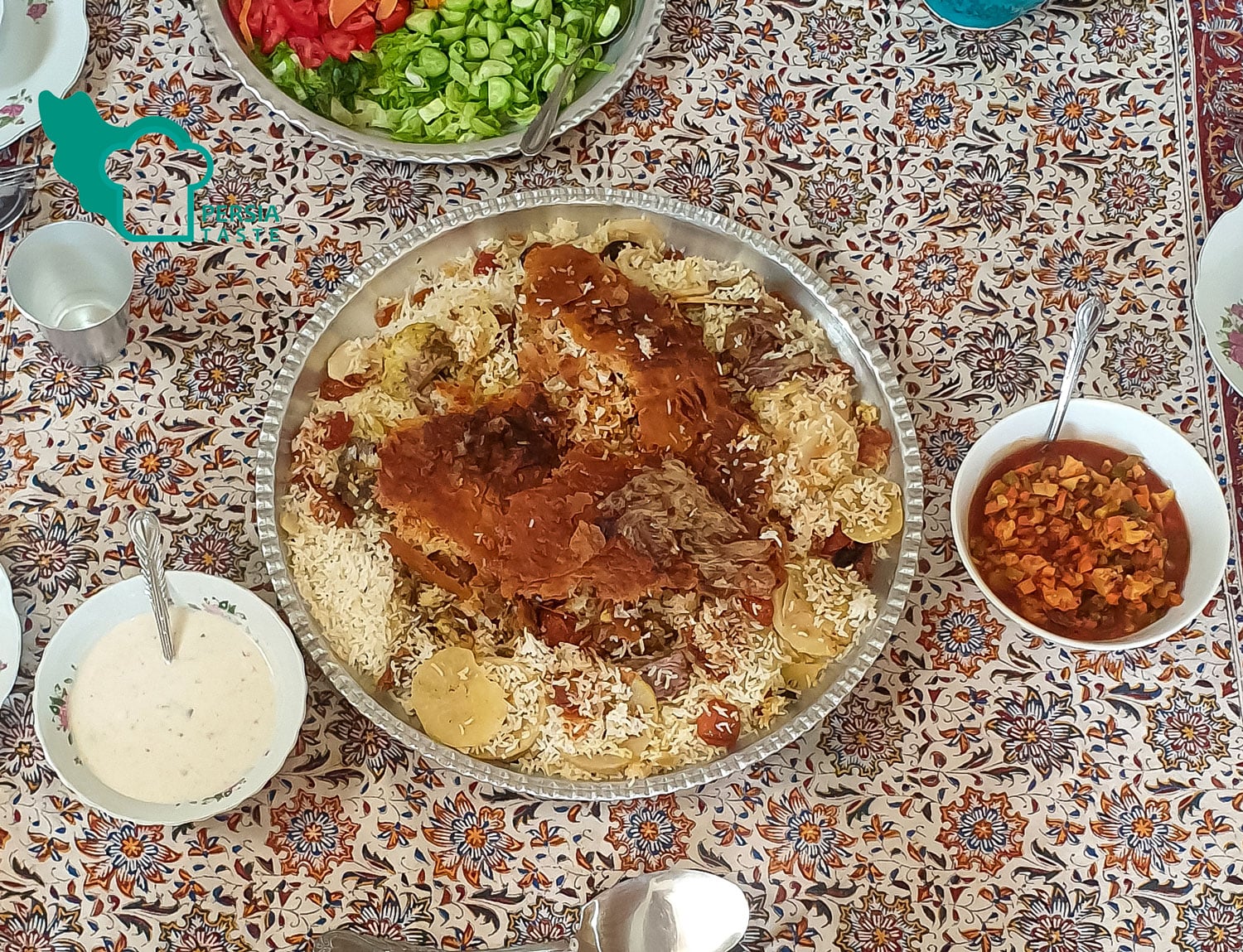
Besides their daily routine foods, Qashqai tribes have got unique foods that are super delicious. One of these foods which are served on special occasions is called layi polo. The food has different versions throughout the country, each one having a local element added to it.
The one that we are going to elaborate on is related to the Qashqai tribe and has goat’s meat as the main ingredient. In the Persian language, the name Layi Polo indicates that sth is put among rice layers (layi means within and polo means backed rice).
The food is usually prepared for honored guests or in weddings celebrations. As Ghashqai people’s cooking is nature-based, they carefully prepare the food over firewood (on a wood fire) as they don’t use modern ovens. Using fresh meat of sheep or goats that have been grazing up in the hills together with other fresh ingredients such as herbs and spices will double the taste of this food and give you a whole new experience in comparison with your previous definition of being yummy.
Ingredients
To make Layipolo we need the following ingredients:
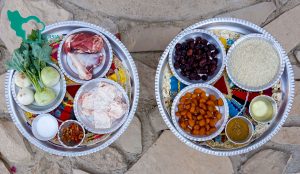
-Persian rice: 4 cups
-mutton: 500gr (or goat’s meat)
-onion: 3
-prune: 200 gr
-walnut: 200gr
-Pomegranate seeds: 100gr (alternatively, you can use barberry)
– Raisin: 200 gr
-oil: as much as necessary
-salt, pepper, turmeric: as much as necessary
-saffron (optional)
Attention; you need to prepare saffron:
Grind saffron threads, mix them with small cubes of ice and let them soak in a cold place like a refrigerator for a few hours.
-Persian rice spices (a mix of cinnamon, cardamom, cumin, dried rose petals, and nutmeg which gives a special flavor to the steamed rice): 1 spoon (optional)
Reciepe
Step 1: steam the meat with onion then add salt to it and fry it in oil until both sides are fried.
Step2: wash the rice gently with water and drain it you need to repeat this phase until the water becomes clear, then soak the rice in water (it should cover the rice by 1 inch) and add one spoon of salt let it aside for about 3 hours (depending on rice quality). Fill a large pot with water and put it on the fire and let it boil then add at least 3-4 spoons of salt and a little oil, now you need to add the drained rice to the pot, wait until the rice drains pop up after 2-3 minutes the rice is ready to be drained with the usage of a colander.
Step 3: Prepare the onions; chop them and fry them in a pan with oil. When they are changed in color (fry until golden).
Step 4: put a pan on the fire (medium one) and add oil, fried onion (you need to save some for the rice), prune, raisin, pomegranate seed, walnut, and spices including turmeric, salt, pepper (both black and red ground pepper), finally add the pomegranate paste (sweet and sour one).
Step 5: Prepare a pot, add oil, and put bread (Nan Lavash in Persian) for Tahdig (crispy rice), then add a thin layer of rice to cover the bread, now put the meat on top of it, add the mixture to the pot. Mix the other parts of fried onion with the rest of the rice and add to the pot to cover the meat. You need to shape the rice into a pyramid. It helps the rice to cook better. Poke several holes in the rice and add a cup of water to it. Use the pot’s lid to cover it, put it on the heat, turn the heat up and wait until you hear the sound of water and oil mixing, then that’s the right time to put a flame tamer under the pot and lower the heat, let it cook for almost 1-1:30 minutes.
Summary
A food that has its origins among Iranian nomadic people. Layi Polo benefits from fresh ingredients and plays an inevitable part in Qshqai tribes’ festivities. The food gives a taste of their culture, and serving it for guests is an indication of the respect nomads hold for their honored guests.