

Ghorme SabziReading Time: 3 min

November’s last Saturday has been declared as Ghormeh Sabzi day by Iranian expatriates, as a means of introducing people to this aromatic food. A dish considered by many as Iran’s national dish, Ghormeh Sabzi is seen as
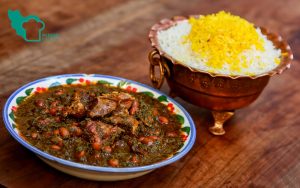
everyone’s favorite. As a 29-year-old Iranian, I’ve never seen someone who can resist this food’s temptation. In Iran, Ghormeh Sabzi is served over Saffron rice with tahdig. If you decided to make Ghormeh Sabzi, then prepare yourself; your house and even the alley would smell like it; and trust me you won’t regret it. There is an inseparable connection between ghomeh sabzi and mothers. In Iran almost everyone believes nothing can beat their mom’s cooked Ghormeh Sabzi.
History of Ghorme Sabzi:
It is said that the history of this food goes back to at least 500 to 2000 years ago. Yet, Ghormeh Sabzi is among those rare dishes which have had little diversion from the original version. However, it does not mean you can experience the same taste all around the country. The food is cooked with a little variation in different provinces in Iran which can be surprising even to Iranians. I can remember in Shushtar (Khuzestan province), I ate the spiciest one; in Guilan eggplant is added, Damghanian people use split pea instead of kidney beans; in some places, different kinds of herbs are used; even the method used and the time spent on frying herbs result in totally different kind of Ghormeh Sabzi. Actually the story can go on and on, given the number of cities and cultures we’ve got in Iran.
The word Ghorme Sabzi consists of two parts. Let’s start from the second word. Sabzi in Farsi means Herb and Ghormeh (means fried) was actually a method used by the nomads to preserve meat. The method is quite interesting: nomads lead a simple lifestyle which revolves mostly around their livestock. They have to migrate in the hope of finding a better pasture, while facing harsh weather conditions. To successfully manage the situation, they have to use some safe methods to preserve foods and necessary ingredients. Ghormeh is one of the methods they applied for meat preservation. After animal killing, the meat would be fried with fat up to the point the excess water is removed (de-moisturize it). Then, the fried meat would be put inside a rumen, and the left fat would be added. Finally, the rumen filled with meat would be sealed and kept in a safe place for future use.
Now, let’s see what will happen if East meets West? In this case, Iran and Italy. If you are a fan of pizza then the good news is, you can try Ghormeh Sabzi Pizza. In 2007, a creative Iranian chef mixed Ghormeh Sabzi and Pizza, which won him third place in the competition.
Summary:
Winning the unofficial title of Iran’s national dish is not easy. In a country abundant with sumptuous foods, Ghormeh Sabzi (a Persian herb stew) is everyone’s favorite. The food is cooked with little variations in different regions. The word Ghormeh sabzi consists of two parts with the first hinting at a method used by the nomads to preserve meat.