

A’ash Reshteh (Persia Noodle Soup)Reading Time: 5 min
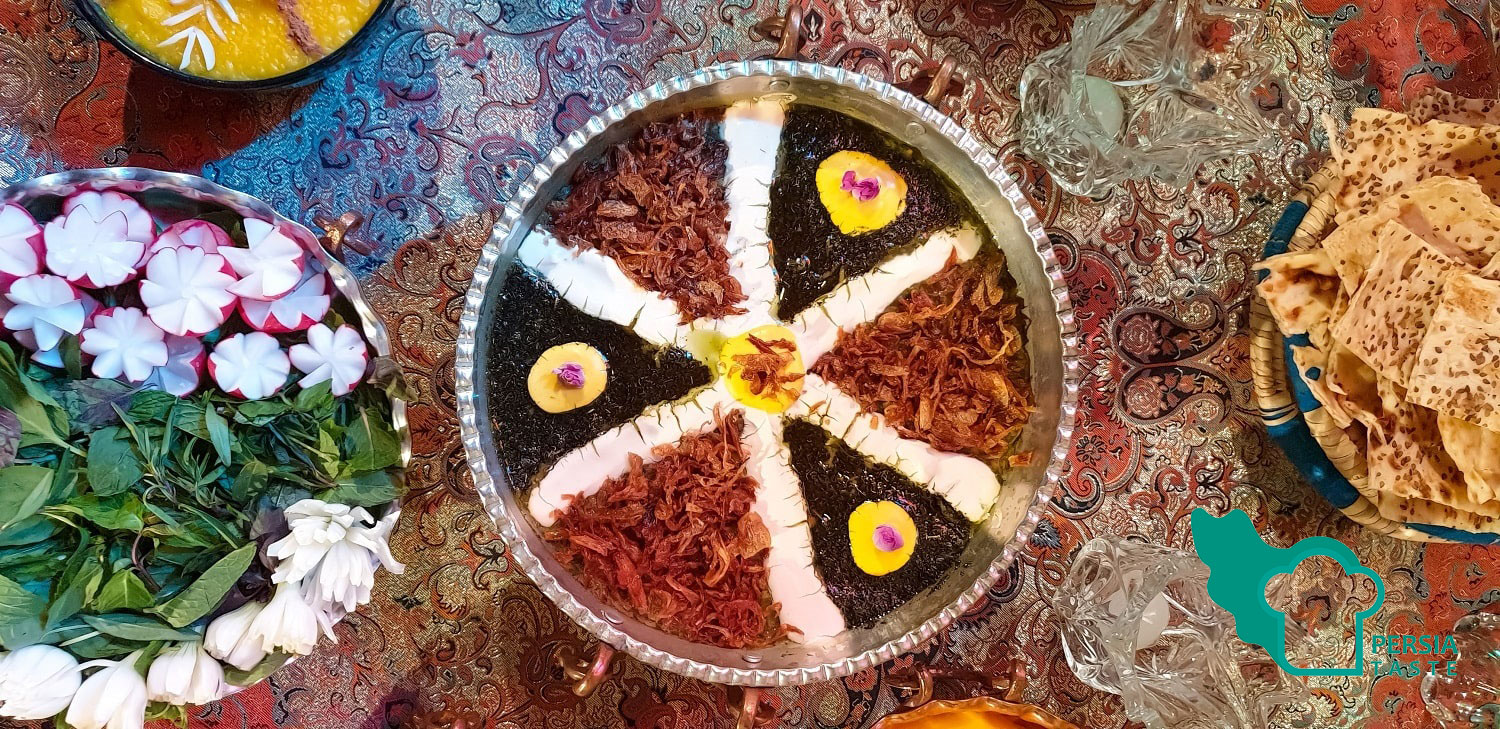
History of A’ash Reshteh:
It’s likely that hearing the Persian word Reshteh does not make any sense to you but as soon as people hear the word noodle, they think about East Asian countries such as China and Korea. However, it’s worthy to know that Reshteh is a name employed for Iranian noodles. Nowadays, these strings are chiefly made in a modern way at specific factories, however, in the past Iranian made their own homemade Reshteh which were far more delicious and provided a firmer texture in comparison to industrial ones. As far as I can remember, my grandma made noodles_such as A’ash Reshteh_at home with manual tools, something that you can still find in remote villages. In Iran noodles are used in a broad range of foods from A’ash (thick soup) to rice, for example; Reshteh polo is a popular Iranian dish that is made as a combination of toasted noodles and rice.
In Persian a chef is addressed, Ashpaz which indicates a person who cooks Ash, this can be proof that Iranians have high regard for Ash. Among various Iranian pottages (A’ash), the one that can be considered as the most popular and common one is A’ash Reshteh. The food maintains a significant place among Iranians, and every person thinks that their mother or grandma makes the best Ash. They make it based on their family recipe, claiming that it is handed to them by their parents. You can find Ash Reshteh throughout the year in different restaurants specifically pottage houses or, as they are called in Persian, Ashkadeh, a restaurant specializing in pottages. However, in Ramadan, the popularity of Ash Reshteh rises to the point that you can see people holding pots while standing in long queues in front of Ash kadeh. Moreover, A’ash Reshteh is quite popular as Nazri (food offerings), a tradition that is still running up today. On religious and specific occasions like Muharram and ceremonies (Eid), people offer free foods to commemorate passed ones, to ask God for the fulfillment of their wishes, and to pray for the healing of the sick. As A’ash Reshteh symbolizes good fortune, Iranians make sure to have it on Nowruz (Persian New Year).
A’ash Reshteh can be served as a main course dish as it is rich in protein, iron, and fiber. Moreover, many Iranians have it as an afternoon snack or for the breakfast; nothing can beat a bowl of A’ash Reshteh in the freezing early morning of winter.
In addition, it typically is a superb choice for vegan people, providing that it does not include sheep pen and kashk as main ingredients. Before getting into the whole process of making this mouth-watering food, it’s good to know a bit about Kashk (whey sauce). It’s a dairy product derived from yogurt. Kashk or Persian style whey is traditionally made when yogurt is properly cooked and curd is derived from it. Traditional and homemade kashk cannot be compared to the store-bought ones, to top it off, kashk which is made in the country is on a whole different level of being scrumptious.
A’ash Reshteh is made with the same base throughout the country but there are some local elements added to it in various parts. For example in Lorestan province, they add Dough (a Persian beverage or drink), or in Mazandaran they use strained yogurt.
Now, it’s time to improve your Persian cooking skills and learn How to make A’ash Reshteh like a pro-Iranian. In the following parts, I’m going to write down the whole process involved in preparing this superb dish based on my mother’s recipe.
Ingredients (for six people):
Chickpea: 50 gr
Pinto bean: 50gr
Kidney beans: 50gr
Lentil: 50gr
Onion: 5 (4+1)
Dried mint: as much as you like
Garlic: 5-6 cloves garlic
Beef Stock or water: 100mll
Oil: as much as necessary
Persian noodle: 175 gr
Vegetables: fresh chives 200gr, spinach 200gr, parsley 50gr, coriander 50gr
Ground turmeric: to taste
Black pepper and salt: to taste
Kashk(Persian style whey): to taste (2 or more cups)
Method:
Step 1:
Soak the beans the night before and drain them few times. You can soak lentil
A few hours before the whole process of cooking since it needs less time to be soaked.
Then on the day of preparing your Ash, cook each of them separately (boil them).
Step 2:
Sauté crushed garlic along with salt and turmeric, until the fragrant is raised. Then in another pan, we need to prepare what is called in Persian; Piyaz Dagh (fried onion), add oil and finely sliced onions, stir onions. After about 2 minutes add turmeric and sauté until caramelized.
Another tasty part of Ash Reshteh is Nana Dagh or fried mint sauce. In a pan, add oil and dried mint powder stir for a few seconds then add a teaspoon of water (optional) fry for a short time, turn off the heat and let it cool. The whole process lasts for less than 1 minute. Be careful, the mint will burn easily.
Step 3:
Boil water in a pot and then add chopped vegetables and cooked legumes. After some time when the vegetables are a little soft, it’s time to add Persian noodles. Let it cook for about 10 minutes, add sauté onion and garlic, and a very limited amount of dried mint sauce (In Persian: Nana Dagh), which we prepared in step 2. In this stage you can add 4-5 tablespoons of Kashk to the pot, however, it’s optional (personally I like it this way.). Ultimately add the spices and kashk (a part of it which is optional) after a short time, it’s ready to serve.
Step 4:
Carefully Pour the food in a serving bowl and garnish it with Nana Dagh, kashk, and fried onions.